
The fintech industry has entered its golden time. The initial period marked by skepticism and distrust is over and the industry has successfully entered a period of trust and value. Fintech is creating customer-centric value propositions in the financial service industry. Fintech companies are primarily involved in digital payments, mobile wallets, money transfer services, fully digital banking (Neo banks), Peer-to-Peer lending, algo-trading, and personal finance.
The growth of the fintech industry has been phenomenal. Mckinsey calls it ‘hypergrowth’, further projecting an increase of threefold till 2028 as compared to traditional banking/finance. Those who are ushering in the field can expect exponential growth for their business.
Technology is what makes fintech (Fin+tech) distinct from traditional financial services. In this context, fintech apps serve as the first touchpoint for the industry’s customers. Services offered by fintech companies are generally accessed by mobile apps and therefore, apps are a critical infrastructure of the fintech ecosystem.
As a fintech company, if you are looking for high-quality mobile app development for the fintech industry but are concerned as to how much a fintech app costs, then this article is for you.
The article details all major aspects related to the costs of fintech apps, including estimates, types, and factors that affect the costs.
Factors that Determine the Fintech App Development Costs
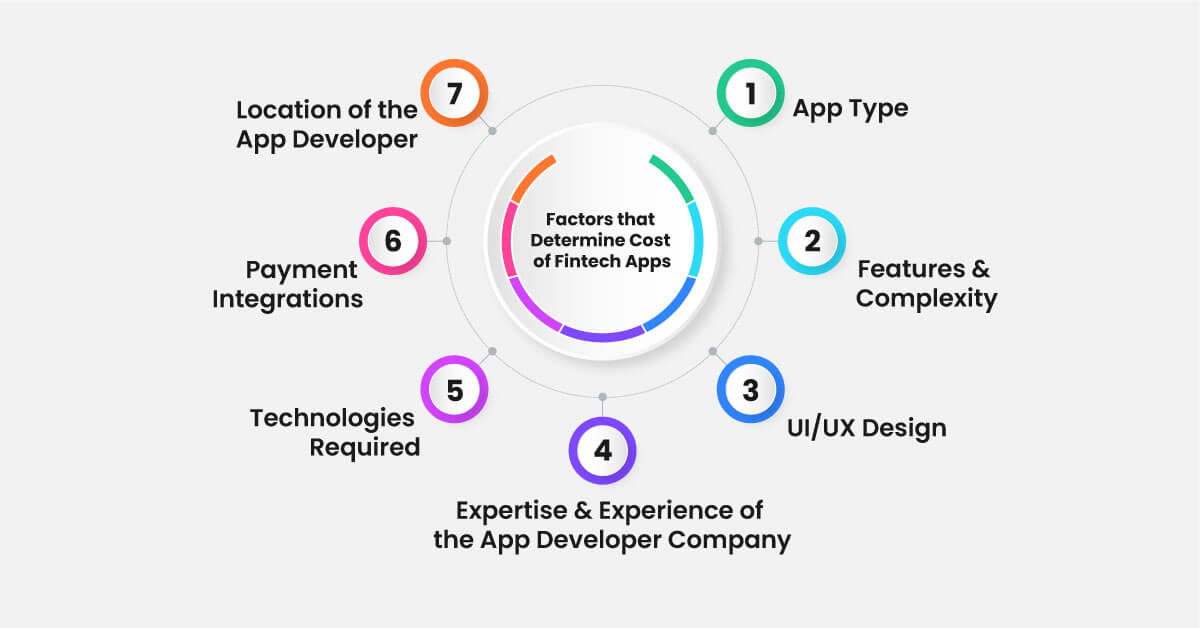
App Type
Features and Complexity
Features are the primary cost drivers. The more features you add to your fintech app, the more you need to shell out of your pocket. Complex features will take more development hours and will increase the cost. Multi-factor authentication, KYCs, secure card management, and multi-currency payment integrations are some features that will inflate the FinTech app development costs. However, most fintech apps like the ones made for banks, digital payments, or online trading will require these features as regulatory mandates too.
The complexity of a mobile app is determined by its features, functionalities, and interactions found within the coding structure.
Another way to perceive complexity might be the challenges a programmer encounters when developing a mobile app. The more challenges a programmer faces while developing the app, the more costly it will be. A standard fintech mobile app is generally more complex than a task-tracking application or a To-Do list app.
UI/UX Design
The user interface (UI) and user experience (UX) design will be critical to determining the visual appeal and usability of the fintech app. Custom animations, graphics, latest design trends are factors that affect the cost. However, fintech companies should pay attention to the UI/UX as no matter how useful your services are or how many features your app has, a poorly designed UI/UX can ruin it all.
For instance, fintech trading apps or investment apps must focus on an easy-to-navigate user interface as these apps may require constant usage and therefore complex UI/UX can repel app users.
Expertise and Experience of the App Developer Company
Inexperienced developers, freelancers, or small-time app developers will provide the lowest quote for fintech apps.
However, you need to make sure that they understand the nuances of the fintech app development world.
- Do they have experience dealing with regulatory requirements?
- Can they develop custom features for security needs?
- Are they capable of managing intricate and complex integration requirements for payment platforms?
The expertise and experience of the app development team play a pivotal role in the success of a FinTech app. However, hiring such a team comes at a premium. Seasoned developers with specialized knowledge in fintech can command higher rates, but their experience can lead to a more seamless development process and a market-ready product.

Enhance the Fintech app development process with our expertise in creating feature-rich and optimized solutions.
Payment Integrations
Location of the App Developer
Fintech applications are universal and you may be choosing to launch your services globally by listing your fintech app on Google Play Store or Apple Store. However, the development and maintenance of your app will be done at one particular location. If you choose app development services in the USA, Australia, Canada, or European nations, your app will cost two to three times the cost you will pay to developers from India or Ukraine. This disparity of cost arises due to the difference in hourly rates paid to developers in these countries.
Fintech app developers in the USA charge somewhere between $50-$80. In Ukraine, the same will be around $35-$60, and in India, it will be around $15-$35.
The cost of Fintech App Development varies between $30000 to $250000 based on the above-discussed factors. A simple fintech app with minimal features will cost less while complex apps can cost up to $250K and even more.
Costs of Development for Various Types of Fintech Apps
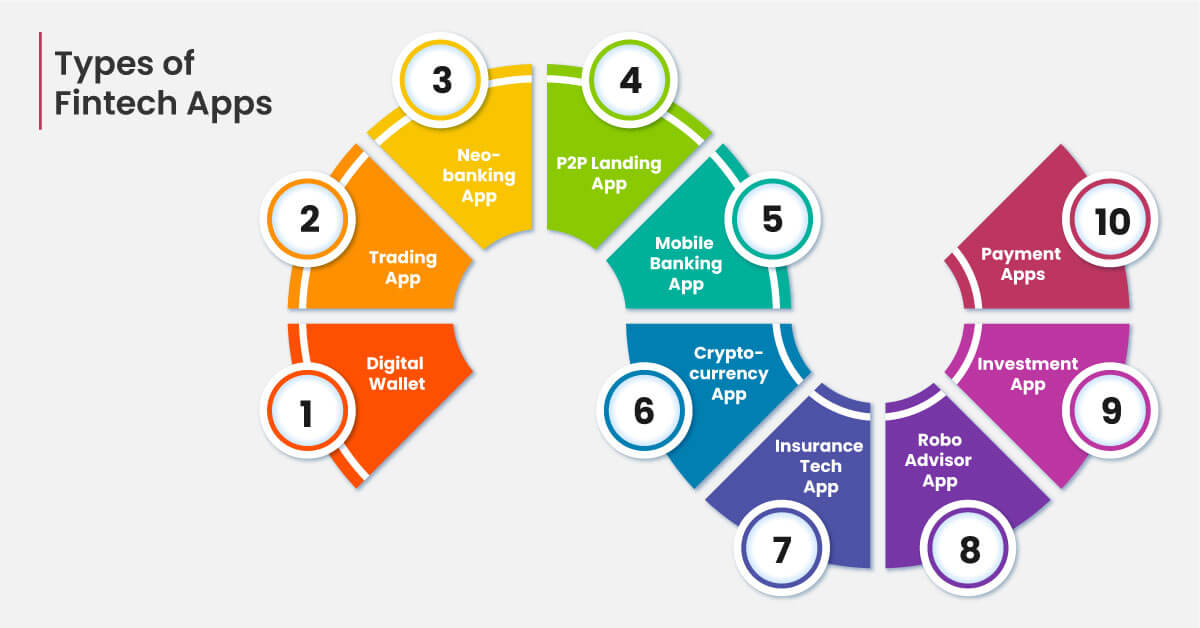
Digital Wallet
This fintech app that stores your bank/card data and allows you to use the platform for easy payments is showing promising growth. Digital wallet usage is projected to surge by over 5.3 billion users globally by the year 2026, says Bank of America.
Digital wallet apps include Square Cash App, PayPal, Google Pay, Samsung Pay, Venmo, PhonePe, Paytm, etc.
If you are interested in creating a digital wallet app then the basic features will include:
- Money transfers between bank accounts and the digital wallet
- Transaction history and alerts of transactions
- Utility payments like gas, electricity, rent, etc.
- QR code scan and payments
- Virtual card management
- Rewards and discounts
- P2P payments
- Secure authentication (PINs, biometrics, 2-factor)
More advanced features will include Chatbot Support, spending analytics, integration with credit bureaus, and multi-currency support.
The cost for the development of a digital wallet ranges between $15000- $50000 for the basic version and $10000-$150000
For the Advanced version.
Trading App
A trading app eases managing investment portfolios, buying and selling stocks/commodities, and provides real-time access to stock markets. Fintech-enabled trading apps have not only democratized access to capital markets but have made it easier for retail traders to participate in stock trading.
Examples of Trading apps include JP Morgan, Webull, Fidelity Investment, FirstTrade, Zerodha, etc.
You will have to make sure the basic features in your trading app include
- User Registration
- KYC (Know Your Customer) compliance
- Live updates of market prices and trends.
- Mobile dashboard to view portfolios, current position
- Trade Execution features: buy, sell, stop loss, etc.
- Fund transfers to and from bank account to trading app
- Charting view of stocks
- Customer support
Advanced features of a trading app include comprehensive technical analysis, automated trading based on pre-set criteria, and custom alerts and notifications based on price movements.
The cost for the development of a trading app ranges between Basic version: $30000 to $50000 and Advanced version: $10000 to $200000.
Neo-banking App
A neo-banking app is a digital-only fintech platform that provides banking services without physical branches. Market expansion of NEO bank is expected at a rate of CAGR 13.15% till 2028. This growth will be greatly driven by consumer demand for 24/7 banking services and custom financial products.
Examples of neo-banking apps include Nubank, Monzo, Revolut, and Chime.
Basic Features of a Neo Banking App
- User Registration
- KYC (Know Your Customer) compliance
- Live updates of market prices and trends.
- Mobile dashboard to view portfolios, current position
- Trade Execution features: buy, sell, stop loss, etc.
- Fund transfers to and from bank account to trading app
- Charting view of stocks
- Customer support
Advanced features of a trading app include Tools for budgeting, tracking expenses, virtual cards, saving goals tracker, AI-enabled financial spending insights, and investment suggestions.
The cost for the development of a Neo banking app ranges between Basic version: $40000 to $60000 and Advanced Version: $150000 to $250000.
P2P Lending App
A P2P lending app eases borrowing and lending between equal parties and eliminates third parties like banks, finance companies, or institutional creditors. These apps are helping businesses to ditch conventional loan alternatives in favor of easier and low-interest loans. The P2P lending market is projected to reach USD 804.2 Billion by 2030 (CAGR of 29.1%) from 2022 to 2030. Crowdfunding lending apps are another variant of lending apps gaining popularity.
Examples of P2P lending apps include LendingClub, Upstart, Funding Circle, Peerform, Avant, Keeva, and StreetShare.
Basic Features of a P2P Lending App
- Secure sign-up/sign-in process.
- Multi-factor authentication.
- Document upload and KYC verification
- Compliance with local and international financial regulations.
- Detailed loan options with filters
- Borrower profiles and creditworthiness indicators
- Real-time updates on loan availability
- Intuitive application form.
- Document management
- Loan approval Status tracking
- In-app communication between borrowers and lenders
- Automated repayment schedules
- Loan Calculator
Advanced Features include credit scoring, credit analytics, integration with credit bureaus, and risk profiling.
The cost for developing a P2P lending app varies between $20000 to $50000 for the Basic version and $75000 to $150000 for the Advanced version.
Get access to expert fintech app development services to create solutions for multiple devices without hampering user experience.
Mobile Banking App
These apps are today ubiquitous for banks. Every bank (small, medium, or large) has its own mobile app through which it provides services like balance checks, statements, fund transfers, bill payments, credit/debit card management, and many more.
Examples of mobile banking apps are Wells Fargo, Capital One, Citibank, Huntington Bank, BoFaML mobile banking app, etc.
Basic Features of a Mobile banking app Include
- Check account balance
- View recent transactions
- Access and download bank statements.
- Funds Transfer
- Bill Payments
- Loan management
- Credit/Debit card management
- Sends immediate alerts for transactions
- ATM Locator
- Customer Support through in-app messaging
- Device Authorization
- Sessions time out
- 2-Factor login
- MPIN login
Advanced Features of the mobile banking app are Biometric Login, Tools for budgeting, tracking spending, and financial planning, Unusual activity alerts, Contactless Payments, Rewards Point management, Investment Services (inbuilt stock trading, mutual funds, and PF accounts), and Customizable Dashboard.
The cost for the development of a Mobile banking app varies between the basic version: $30000 to $100000 and the Advanced version: $150000 to $500000.
Cryptocurrency Wallet
Cryptocurrency mobile apps are popular because they ensure transactions are anonymous, encrypted, and decentralized. Crypto wallets safeguard your private keys, enabling secure cryptocurrency transactions. Also, the key motivator for crypto adoption is the astronomic financial returns.
Examples of cryptocurrency apps include Coinbase, Kraken, Binance, Gemini, eToro, and CoinDCX.
If you are looking to build your our cryptocurrency wallet app then the cost will depend on the following features
- Private Key Storage
- Advanced encryption methods
- QR Code Scanner for wallet addresses and public keys
- Support for various cryptocurrencies in a single wallet
- Real-time cryptocurrency prices from exchanges
- Alerts for transaction statuses and price changes
- Integrated payment gateways for buying/selling digital assets.
- Automatic logout feature for enhanced security
Advanced features include various API integrations, Backup & Recovery, advanced charting tools, historical data, and more.
The cost of crypto wallet app development varies between $25000 to $60000 for the basic feature app while one must shell around $150000 to $200000 for the advanced version.
Insurance Tech app
An Insurtech app utilizes technology to provide insurance products more conveniently. Insurance apps in 2024 support health, medical care, life and term insurance, motor insurance, and property insurance. Embedded with data analytics, artificial intelligence, and cloud computing, insurance fintech (insurtech) offers innovative insurance solutions.
Examples of Insurtech apps are Lemonade, Hippo, and Planto.
Basic Features in Insurtech Apps include
- Personalized Policies module using AI
- Claim processing module
- Claim assessment
- Policy management
- Online premium payment
- Policy surrender module
- IoT for telematics (for auto insurance apps)
- Fraud Detection
- Customer Support and Chatbots
Advanced features include resources for educating customers, custom insurance products, insurance premium calculators, etc.
The cost of development for an Insurtech App varies between $35000 to $60000 for a basic insurance app and an advanced insurance app with complex features can cost up to $170000 to $250000.
Robo Advisor App
A Robo Advisor App is a digital platform that provides automated, algorithm-driven financial planning services with little to no human supervision. The Robo Advisor app collects information from clients about their financial situation and learns about their future goals. This data is analyzed to offer investment advice in various asset classes, eliminating emotional biases. A report from Grandview Research projects the robo-advisory market to scale at a CAGR of 30.5% (2024-2030). This is an exciting opportunity for those entering the market with robo-advisor apps.
Examples of Robo Advisory apps are Weathfront, Betterment, M1 Finance, and Ellevest.
The key features include
- User Onboarding (The app collects key information for personalized advice)
- Determine users’ risk tolerance and goals
- Automated Investment portfolio management
- Connect with financial data sources
- Tax management
- Rebalancing
- Stock APIs for up-to-date info.
- Enable alerts on portfolio performance
- Analytics and Reporting
- Security Features
Advanced features include account aggregation, a knowledge panel, and retirement planning.
The cost of development for an Insurtech App varies between $35000 to $55000 for the basic version and an advanced app may cost between $100000 to $300000.
Investment App
An investment app in the financial technology (fintech) world is designed to help customers manage investments, portfolios, and other asset classes directly from their smartphone app. The trend for investment applications is in a positive trajectory with projections stating 19% CAGR till 2032.
Examples of investment apps include Acorn, Ally Invest, Charles Schwab, SoFi, etc
Basic Features of an Investment App
- Registration and onboarding
- Profile management
- Account setup
- Fetch investment products from ETFs, and mutual funds
- Portfolio management
- Link bank account
- Fund withdrawals
Advanced features include market data analysis, advanced trading tools, multi-brokerage account management, and algorithmic trading.
The cost of development for an Insurtech App varies as Basic version: $30000 to $40000 and Advanced version: $60000 to $200000.
Payment Apps
The application offers a user-friendly mobile interface for initiating and receiving payments. Payment apps ensure uninterrupted data exchange with payment networks like ACH, SWIFT, and card networks (VISA, MasterCard, American Express). Storage of data adheres to PCI DSS regulations to safeguard sensitive cardholder information.
Examples of Payment Apps include PayPal, Venmo, Zelle, Samsung Pay, Square Cash, Apple Pay, Gpay, and Wise.
The basic features of Payment Apps are
- Payment transfers (domestic and international)
- Transaction history
- Fund Management
- Device identification and authorization
- Security features
- KYC module
- Adding personal/Business Info
- Card Management
- Billing and Invoicing
- Account Balance updates
- QR code support
Advanced features of payment apps include Audit trail, integration with accounting systems or POS, multi-currency support, AI-based fraud detection, and more.
The basic version of the Payment app will cost around $50000 to $75000 and Advanced payment processor apps will go up to $150000 to $500000.
Team Required for Fintech App Development
| Project Manager | Business Analyst | Solution Architect |
|---|---|---|
| Creates project plan | Analyzes client/user needs | Designs fintech app architecture |
| Prioritizes work scope | Translates needs into application requirements | Plans system integrations |
| Monitors execution | ||
| Coordinates team communication | ||
| Reports progress | ||
| Front-end Developer | Back-end Developer | Quality Assurance Engineer |
| Delivers the app’s UI | Codes app’s back end | Implements test strategy and plan |
| Fixes QA-found defects | Integrates systems | Creates test cases |
| Fixes QA-found defects | Validates app quality | |
| UI Designer | UX Designer | DevOps Engineer |
| Creates user interface style | Conducts UX research | Containerizes app components |
| Develops UI kit for development | Designs user interactions | Configures CI/CD pipelines |
| Performs usability testing |

Leverage our expertise in creating apps with modern tools to stay updated with the latest trends.
How to Build a Fintech App?
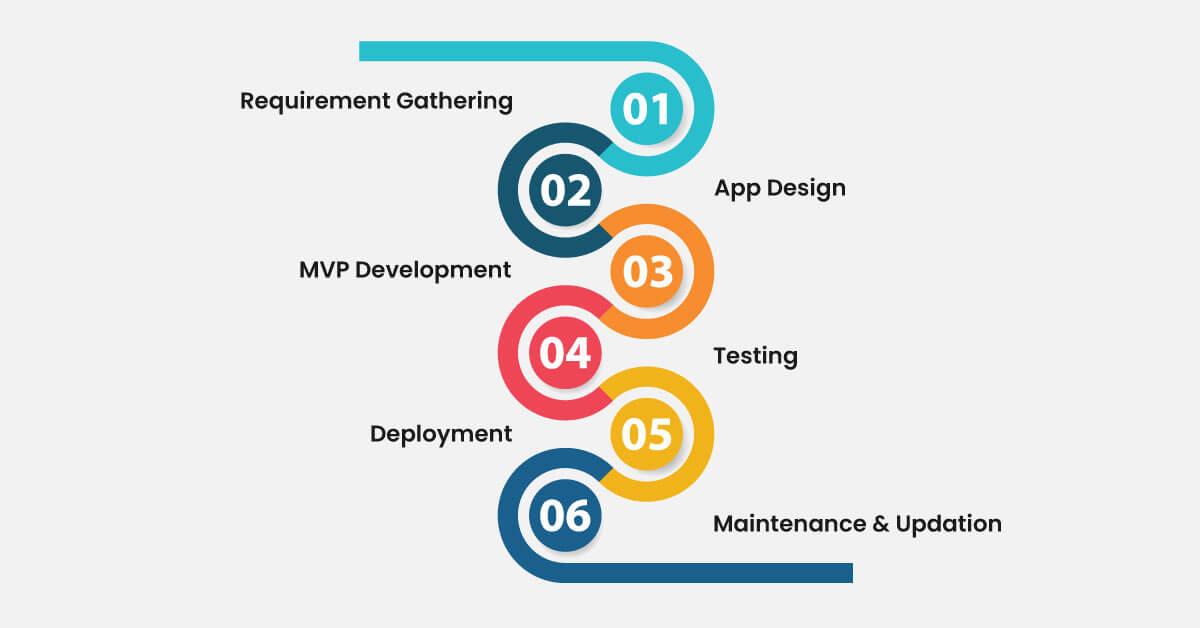
- Gathering: Outline project requirements with your FinTech app development partner.
- App Design: Design the app focusing on engaging UI/UX.
- MVP Development: Code features, integrate technologies, and apply top security practices to create a representative MVP.
- Testing: Ensure the MVP is bug-free through comprehensive testing.
- Deployment: Launch the app on chosen platforms (iOS, Android, or both).
- Maintenance and Updation: Continuously update the app with new features based on user feedback to facilitate scaling.
Developing a Fintech app involves combining various technologies, tools, and languages
Let’s break these down into simpler terms
1. Programming Languages
For Android
(Java or Kotlin) Java is great for complex apps and works across many devices. Kotlin is newer, reduces errors, and is especially good for apps where mistakes can’t afford to be made, like in finance.
For iOS
Use Objective-C or Swift. Objective-C has been around for a long time and is very reliable. Swift is newer, faster, and easier to work with, making it a good choice for modern finance apps.
2. SDKs (Software Development Kits)
3. Frameworks
4. Frontend Web App
5. Storage
6. Blockchain
7. Payment Integration
Cost of Developing a Fintech App: In-house vs. Outsourcing
While having an in-house development team may seem like the most secure choice, the cost-effective and time-saving advantages of outsourcing fintech app development creation can be quite alluring. Your in-house team of developers, UI/UX designers, and quality assurance engineers can cost you a lot.
Hiring these people on payroll is expensive and also HR experts find it difficult to hire competent developers and UI/UX designers. In this context, outsourcing fintech app development to an external agency is not only cheaper but also ensures that you have a team of seasoned professionals for your project. The only downside is dealing with different time zones (in case you hire an agency that has a time zone difference of more than 6 hours to yours.)
Comparison of Development Costs for iOS and Android Fintech Apps
When it comes to mobile app development, the two leading platforms are iOS (Apple) and Android (Google). Each platform has its own development environment, user expectations, and cost implications. A fintech application of the basic version for the Android platform will cost you between $30000 to $50000, and the same for the iOS platform will cost you between $50000 to $75000. For Cross-platform fintech apps, you will need to shell out more than $80000.
Developing an iOS fintech app often requires a smaller investment in compatibility testing due to the limited range of Apple devices. However, the development tools and licensing fees are costly. Android has a larger global market share and a more diverse range of devices. This diversity increases the complexity and time required for testing. However, its open-source nature saves money on licenses.
Bottomline
What you invest is reflective of the quality you receive! However, choosing a reliable Fintech app development company is important to balance expense and quality. Sometimes, even subpar teams may charge you huge but keep the quality minimal. Therefore, consideration of all factors (other than cost alone) that help you select the best fintech app development partner is paramount to getting a flawless, cost-effective, and standard fintech app for your business.
While the prices denoted in the article are suggestive of the standard fintech app development requirements, the actual costs can vary based on multiple other variants. Fintech apps requiring offline functionality, chatbots, blockchain integration, AI/ML, or IoT will need more money to build.
X-Byte Enterprise Solutions provides hackproof fintech apps for verticals ranging from banking mobile apps, crowdfunding apps, payment apps, and P2P Lending apps to wealth management apps, payment gateway development, and investment management apps.
Contact our team for further details.